
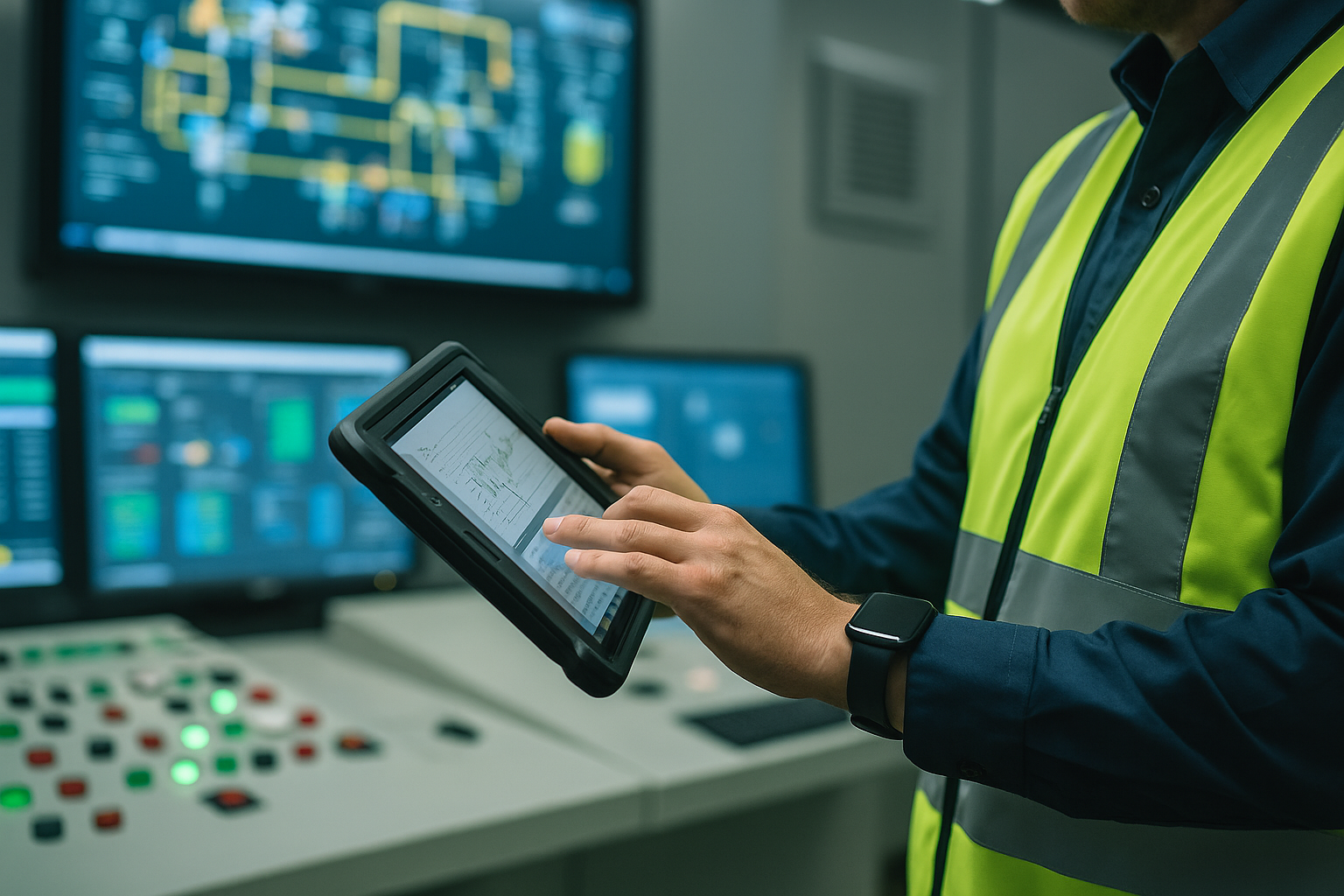
In critical industries, the most expensive repair is the one that happens at the worst possible moment. Smart maintenance moves that moment from a surprise to a plan.
Pharmaceutical lines, industrial plants, vessels and power facilities cannot afford to stop. Remote diagnostics and predictive repairs let engineers see problems forming and fix them on schedule, long before they become emergencies.
The real cost of downtime
A failed component rarely costs only its own price. Lost production, spoiled batches, missed deliveries, emergency freight and overtime all add up, and in critical operations a single hour of unplanned downtime can outweigh the repair many times over. The goal of smart maintenance is simple: stop paying for surprises.
Three ways to maintain equipment
Reactive
Fix it after it breaks. Lowest effort up front, highest cost and risk when failure hits.
Preventive
Service on a fixed schedule. Better, but parts may be replaced too early or too late.
Predictive
Act on real condition data. Repair exactly what needs it, exactly when it needs it.
How remote diagnostics works
- Collect data. Sensors and equipment logs capture temperature, current, vibration, voltage and battery health.
- Connect securely. Authorized engineers review the data remotely, with customer approval and controlled access.
- Analyze trends. Patterns and drifting readings reveal wear before a fault appears.
- Alert and act. Early warnings trigger a planned repair, often without a site visit until parts are ready.
Where the savings come from
- Avoided downtime: faults are fixed during planned windows, not during production.
- Fewer emergencies: less rush freight, overtime and last-minute spare-part premiums.
- Longer asset life: small issues are corrected before they damage expensive components.
- Smarter spares: stock what the data says you will need, not everything you might need.
- Safer operations: early detection reduces the risk of overheating, electrical faults and sudden shutdowns.
Industries that benefit most
Industrial & Pharmaceutical
Production lines and controls where stoppages and compliance gaps are costly.
Marine & Offshore
Vessels where remote support avoids long waits for specialists.
Energy & Power
Battery and power systems that need constant condition monitoring.
Security and confidentiality
Remote access is only valuable if it is trusted. FTI works under agreed access rules, uses controlled and authorized connections, and treats customer data, configurations and drawings as confidential. Access is limited to what the job requires.
How to get started
- Identify critical assets. List the equipment where failure would hurt most.
- Set up monitoring. Define what to measure and how data will be shared.
- Start remote support. Our engineers review trends and flag issues early.
- Repair on plan. Fix problems in scheduled windows and keep improving.
The bottom line: smart maintenance turns downtime from a risk into a managed schedule. The savings come from the failures that never happen.
← Back to all articles